
Articles
Trekking first aid kit: why you should always carry one in your backpack
Learn how to assemble a first aid kit for trekking, what basic items to bring, and why it is essential to check it before each outing to the mountains.
Outdoor Index
@outdoorindex.cl
When trekking or engaging in any activity in the mountains, preparation is a fundamental aspect to enjoy the experience safely. Many people worry about carrying enough water, appropriate clothing, or food, but they forget an element that can make a big difference in case of any unforeseen events: the first aid kit.
A trekking first aid kit doesn't have to be large or complex, but it should be well thought out. Its purpose is to allow a quick response to minor injuries, physical discomfort, or common situations that can occur during a walk in nature. From a blister on the foot to a headache, an allergic reaction, or digestive discomfort, having the right items can help manage the situation until returning to a safe place or receiving medical attention if necessary.
In natural environments, where one is often far from health centers or immediate assistance, having a basic first aid kit can make a significant difference. Beyond being a piece of equipment, the first aid kit represents a tool for prevention and a demonstration of responsibility when practicing outdoor activities.
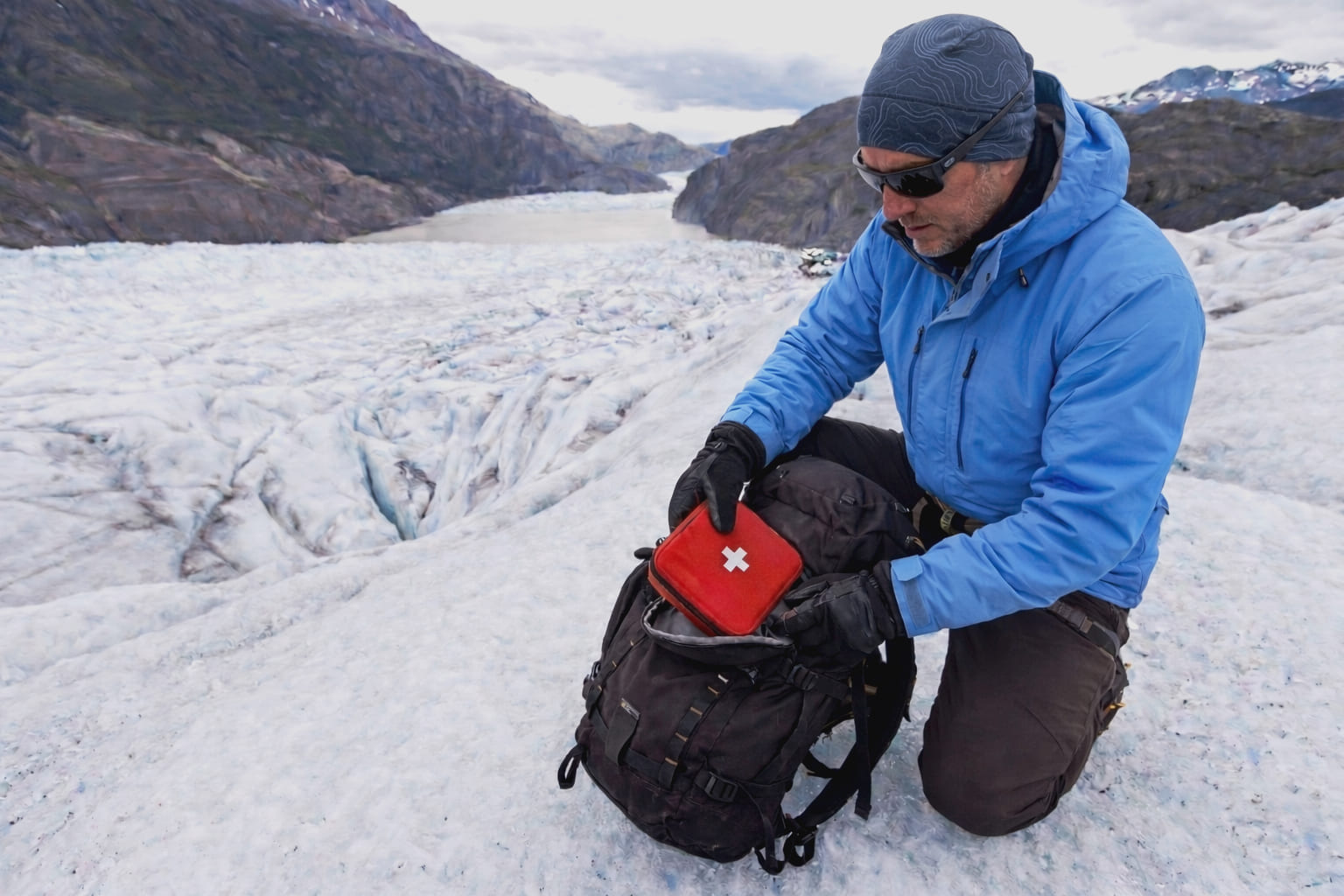
The importance of carrying a first aid kit in trekking activities
During a mountain hike, even routes considered easy can present unexpected situations. Irregular terrain, changing weather conditions, and prolonged physical effort can lead to minor injuries or discomfort that, without proper attention, can turn into a bigger problem.
A blister caused by shoe friction, a minor cut from a rock, or a small fall are common situations during trekking. In these cases, having gauze, bandages, or disinfectant allows for quick treatment of the injury and a safer continuation of the route.
The first aid kit is also useful for common physical discomforts during long hikes, such as muscle pain, headaches, or mild inflammation. An appropriate pain reliever can help alleviate these discomforts and prevent the activity from becoming uncomfortable or even forcing one to abandon the route.
There are also digestive issues that can arise during a prolonged hike, especially when there are changes in diet or hydration. Having an anti-diarrheal medication can be very helpful in managing these types of inconveniences in the field.
Additionally, in natural environments, one may encounter insect bites or mild allergic reactions caused by plants or foods. In these cases, having antihistamines can help control symptoms until returning to a safe place.
Beyond the practical benefits, carrying a first aid kit also reflects a responsible attitude towards the mountains. Prevention and preparation are part of an outdoor culture that seeks to reduce risks and promote safe experiences in nature.
How to assemble a basic first aid kit for trekking
A trekking first aid kit should be compact, lightweight, and contain the necessary items to respond to common situations in the field. It's not about carrying a complete pharmacy, but including the essentials.
Among the basic medications, it is advisable to carry pain relievers and anti-inflammatories such as paracetamol or ibuprofen. These can help alleviate muscle pain, joint discomfort, or headaches that sometimes occur during long or demanding hikes.
It is also advisable to include anti-diarrheal medications, especially on long excursions or crossings where access to sanitary services may be limited. Similarly, antihistamines are useful for treating mild allergic reactions or insect bites.
Regarding wound care materials, a first aid kit should include sterile gauze, bandages, medical adhesive tape, and special dressings or patches for blisters. Antiseptic wipes or disinfectant solutions allow for proper cleaning of a wound before covering it, reducing the risk of infection.
Other useful items are disposable gloves, which allow for safer handling of wounds, small scissors for cutting bandages or medical tape, and tweezers that can be used to remove thorns, splinters, or small objects embedded in the skin.
On longer treks or in more remote mountain routes, many people also include an emergency thermal blanket. This item is extremely lightweight and can help retain body heat in emergency situations.
Adapting the first aid kit according to the route and duration of the trek
The contents of the first aid kit may vary depending on the type of activity being undertaken. A short hike of a few hours will likely require fewer items than a multi-day crossing or a route in isolated areas.
For this reason, it is advisable to adjust the contents of the first aid kit according to the duration of the activity, the number of people participating, and the distance from medical assistance centers.
It is also important to consider the personal needs of each group member. Some individuals may require specific medications for allergies, digestive issues, or other medical conditions. These items should be included in the first aid kit or kept easily accessible within the backpack.
The idea is to maintain an efficient first aid kit that allows for responses to common situations without adding unnecessary weight to the gear.
Check the first aid kit before each outing
One aspect that many people overlook is checking the first aid kit before each trek. Over time, some medications may expire, certain items may have been used in previous outings, or some materials may deteriorate without immediate notice.
Before each outing, it is advisable to check the expiration dates of the medications and ensure that the gauze, bandages, and dressings are in good condition.
It is also important to verify that all contents are dry. During previous hikes, the first aid kit may have been exposed to moisture or rain, which could have affected some medications or wound care materials.
To avoid these problems, it is advisable to store the first aid kit inside a waterproof bag or case. This way, the contents remain protected from moisture and changing environmental conditions.
Spending a few minutes checking the first aid kit before each outing can prevent inconveniences when it is truly needed.
Preparation and safety in the mountains
The mountains always involve a certain degree of uncertainty. Even with careful planning of a route, factors such as weather, terrain, or the physical condition of the group can generate unexpected situations.
Carrying a well-prepared first aid kit is part of a safety culture in outdoor activities. It not only allows for reactions to minor accidents but also helps manage discomforts that could affect the normal progression of the activity.
In trekking, safety often depends on simple details. A basic, well-assembled first aid kit that is checked before each outing can become one of the most valuable items in the backpack.
If you are thinking about planning a new trekking route, at Outdoor Index you can review various available trekking experiences to organize your next adventure in nature and explore some of the most incredible landscapes in Chile.
Outdoor Index
@outdoorindex.cl


Post a comment!
Comments