
Articles
Birdwatching in southern Chile
Birdwatching in southern Chile with unique species, incredible landscapes, and experiences in nature to observe wildlife in its habitat.
Outdoor Index
@outdoorindex.cl
The south of Chile is one of those places where nature needs no introduction. It is enough to stop for a moment, keep silent, and observe to realize that the environment is full of life. Among mountains, forests, lagoons, and vast pampas, birdwatching becomes a constant experience, often unexpected, that accompanies the entire journey.
Unlike other more structured activities, birdwatching does not always involve following a specific route or adhering to a rigid itinerary. In the south of Chile, this experience occurs naturally. It can begin during a hike, continue at a viewpoint, or even appear in the middle of a transfer. The key is to learn to look more attentively and understand how the environment behaves.
A territory that favors birdwatching
One of the reasons why the south of Chile stands out so much in birdwatching is its diversity of ecosystems. In just a few kilometers, the landscape can change completely. Native forests, with their dense and humid vegetation, contrast with the open areas of the Patagonian steppe, where visibility is wide and the wind is part of the landscape.
In addition, lagoons, wetlands, rivers, and coastal areas serve as true concentration points for wildlife. Each of these environments hosts different species, making birdwatching varied and dynamic.
This diversity not only increases the chances of observing birds but also makes each outing different. It is not about seeing the same thing all the time, but about understanding how each species adapts to its environment.
Birds of the native forest and the characteristic sound of woodpeckers
In the forests of the south, silence is often broken by a deep and repetitive sound. It is the drumming of woodpeckers, one of the most representative bird families of this area.
Here, species such as the Magellanic Woodpecker, one of the largest in South America, along with the Pitío and the Little Woodpecker, stand out. Each plays a fundamental role in the ecosystem, as they contribute to the health of trees and help maintain the balance of the forest.
The Magellanic Woodpecker is particularly valued for its size, its active behavior, and the relative difficulty of finding it in other parts of the world. Its presence usually indicates well-preserved forests, which adds additional value to its sighting.
Wetlands and lagoons as a refuge for aquatic birds
The bodies of water in the south of Chile are key spaces for bird observation. In lagoons and wetlands, it is common to find species such as the Black-necked Swan, which moves gracefully in calm waters.
It is also possible to observe flamingos in certain areas, as well as different species of ducks such as the Juarjual Duck, the Royal Duck, and the Flying Quetru, which inhabit these environments and exhibit very interesting behaviors to observe.
These places allow for a more leisurely observation, where it is possible to see birds feeding, moving, or interacting in their natural environment.
The sky as a stage for large birds of prey
Birdwatching in the south of Chile is not limited to the ground or water. Looking up at the sky is a fundamental part of the experience.
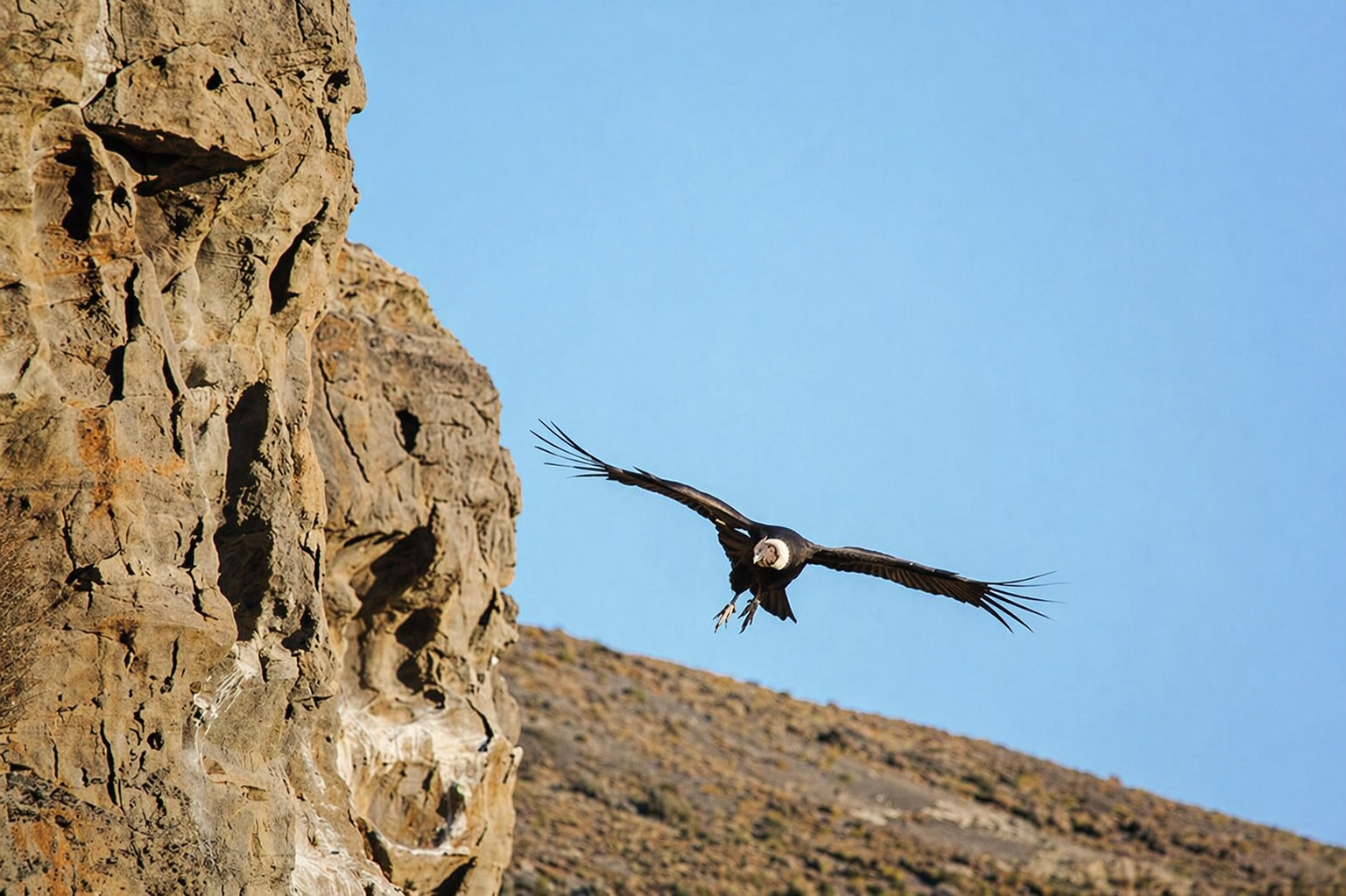
The Condor, the national bird of Chile, is probably the most impressive spectacle. Its wingspan and its ability to glide using air currents make it one of the most iconic images of Patagonia.
Alongside it, it is common to observe species such as the Black-chested Buzzard-Eagle, the Great Horned Owl, and the little falcon, all birds of prey that play an essential role in the balance of the ecosystem.
These birds do not always appear immediately, but when they do, they completely dominate the scene.
The Patagonian steppe and its characteristic species
In open areas, where the landscape becomes broader and clearer, the Patagonian steppe appears. This environment allows for observing species from a greater distance and with greater clarity.
Here, the Ñandú, also known as the American ostrich, stands out, moving in groups across vast expanses. Its presence is characteristic of this type of landscape and represents one of the most unique sightings in the south of Chile.
Less visible species that enrich the experience
Beyond the most recognized species, the south of Chile is home to birds that require more attention to be detected. Among them are the Rara, the Southern Churrín, and the Kingfisher.
These birds tend to move in more specific areas or remain hidden in vegetation, making their observation more challenging and, at the same time, more rewarding.
On many routes, it is also possible to encounter terrestrial fauna such as the Piche Armadillo and the Peludo or the Skunk, which complements the experience and reinforces the connection with the natural environment.
When and how to observe birds in the south of Chile
Birdwatching can be done year-round, but there are times when activity is higher. Spring and summer are usually ideal, as they coincide with breeding periods and increased movement.
During these seasons, birds are more active, vocalize more frequently, and move constantly, which facilitates their detection.
Beyond the season, the key is in the rhythm. Going out early, keeping silent, and observing attentively significantly increases the chances of sightings.
A different way to connect with nature
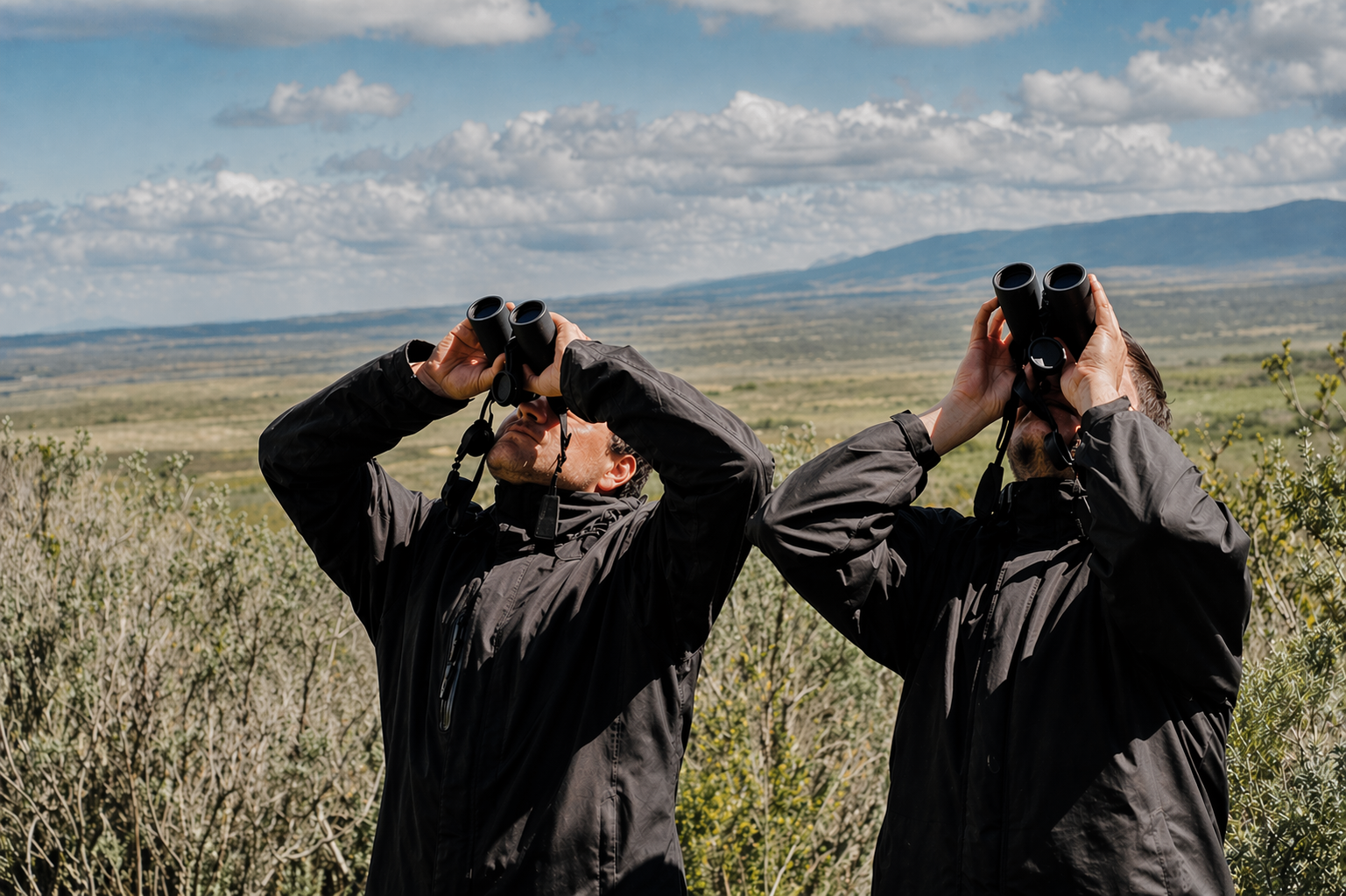
Birdwatching completely changes the way one experiences the environment. It forces one to slow down, pay attention to details, and interpret what is happening around.
It is not just about identifying species, but about understanding how they relate to the landscape. In that process, the journey becomes deeper and more meaningful.
Discovering the south of Chile from another perspective
Exploring the south of Chile through birdwatching allows access to a different dimension of travel. It is not just about visiting iconic places, but about better understanding the environment and its biodiversity.
If you are thinking of experiencing this, at Outdoor Index you can discover options such as a wildlife tour in Patagonia or a birdwatching experience at the estancia, where you can explore privileged natural environments and significantly increase your chances of observing these species in their real habitat.
The south of Chile is not only traveled through; it is also observed. And in that observation, some of the most memorable experiences of the journey appear.
Outdoor Index
@outdoorindex.cl


Post a comment!
Comments