
Articles
How safe is it to do the O Circuit in Torres del Paine? Guide for a responsible experience
Discover how safe the O Circuit in Torres del Paine is and what precautions to take to experience this journey in a responsible manner and accompanied by a guide.
Outdoor Index
@outdoorindex.cl
The O Circuit in Torres del Paine is one of the most iconic, extensive, and challenging treks on the continent. Unlike the popular W Circuit, the O completely surrounds the Paine massif and requires between 7 and 8 days of continuous hiking. The route crosses remote areas, mountain passes, and sectors exposed to one of the most unpredictable climates in the world: the Patagonian weather.
This raises a question that many travelers ask before attempting it: Is it really safe to do the O Circuit?
This article addresses all of that clearly and comprehensively.
Safety on the O Circuit: the essentials from the start
The O Circuit is not a technical trek, but it does require preparation and judgment. You don't need mountaineering experience to complete it, but it is important to have good physical condition and be willing to walk several days in a natural environment that can change rapidly. The key is to understand that the difficulty of the circuit is not based on the complexity of the terrain, but on exposure to the Patagonian weather and the total length of the journey.
The safety level of the circuit depends mainly on the hiker's ability to:
• Properly plan
• Interpret the weather
• Follow official instructions
• Make prudent decisions in case of sudden changes
Most incidents are caused by avoidable factors, such as walking in extreme weather, deviating from the trail, underestimating the strength of the wind, or not carrying the necessary equipment.
Paso John Gardner: a complex point on the O Circuit
Although the entire circuit requires attention, the most delicate section is the Paso John Gardner, located between Camping Los Perros and Refugio Grey.
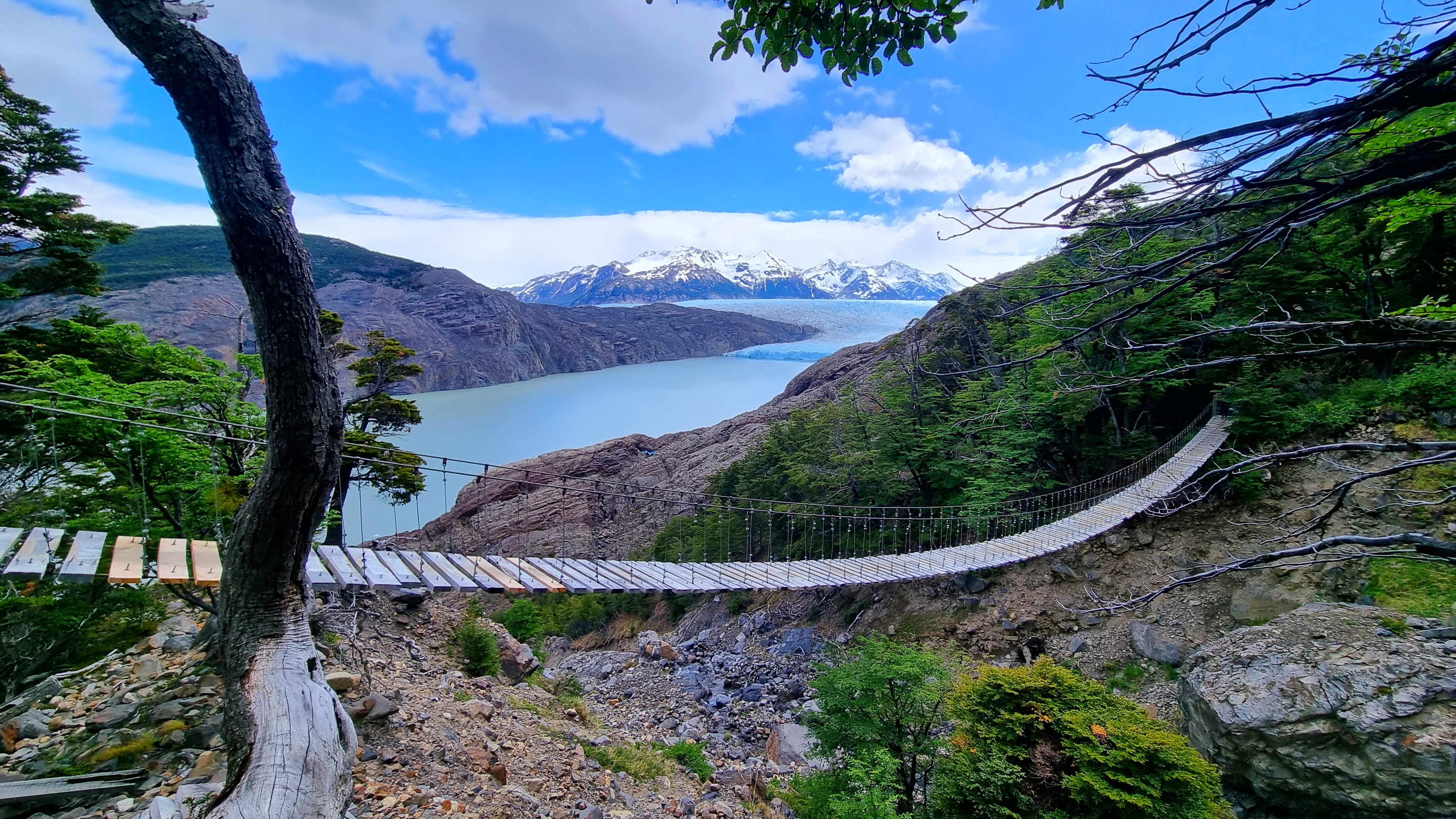
Despite its moderate altitude (around 1,200 meters), this pass is completely exposed to winds and cold air masses coming from the Southern Ice Fields. On clear days, it offers an impressive panoramic view of the Grey Glacier and the ice field. In adverse conditions, it can present:
• Winds exceeding 150 km/h
• Blizzards with minimal visibility
• Accumulated snow
• Very low thermal sensation
• Loss of visual references
These conditions are not daily, but they occur on some days of the year. The key is not to advance if the weather becomes unfavorable.
Why do accidents happen? Real lessons from the mountain
Experienced guides in Torres del Paine agree that serious accidents often originate from bad decisions, not inherent dangers of the trail.
The 3 most frequent factors are the following:
Factor 1: Continuing the route in bad weather
With strong winds or blizzards, advancing can be extremely difficult. Stability is lost, the trail disappears, and the risk increases rapidly.
Factor 2: Disorientation due to low visibility
The Paso John Gardner trail is marked, but under heavy snow or fog, it can become imperceptible. Without visual references, straying into dangerous areas is easy.
Factor 3: Lack of experience in extreme weather
The Patagonian weather is different from other mountain environments. With winds over 120 km/h, snow, and cold, a 1,200-meter pass can feel as demanding as a summit in the Andes. Those not accustomed to extreme conditions can quickly find themselves in a risky situation.
Is the O Circuit really safe? A look based on how the park operates
The O Circuit takes place within Torres del Paine National Park, an area managed by CONAF, the entity responsible for applying official regulations for public use, monitoring compliance with regulations, and ensuring the general safety of visitors. During the high season, park rangers carry out entrance controls, monitor weather conditions, and provide updated information on trail conditions.
Along the route, hikers can also receive general guidance at authorized points, such as information on itineraries or weather conditions. However, all formal decisions regarding trail closures, passage restrictions, or route openings are the sole responsibility of CONAF, the authority in charge of park administration.
While this combination of official regulations, control at access points, and availability of practical information contributes to a safer experience, the O Circuit remains a route of high physical and technical demand. Its safety depends largely on preparation, proper equipment, and the correct decision-making by each hiker.
Essential recommendations for a safe experience
Before starting the route, it is important to understand that the O Circuit can be a very safe experience as long as it is approached with preparation and judgment. The key is not to be an expert mountaineer, but to anticipate the weather, follow park instructions, and make informed decisions at each stage. These recommendations are not meant to generate concern, but to provide you with clear and practical tools to enjoy the journey with tranquility, confidence, and safety. Below, you will find five recommendations to consider before and during your journey.
Recommendation 1: Walk with a certified guide
At Outdoor Index, we recommend doing this circuit with a guide, especially if you have no experience in multi-day treks or are unfamiliar with Patagonia. A guide provides: Weather reading Safe decision-making Emergency management Terrain knowledge Guidance to avoid deviations
Recommendation 2: Respect park signs and warnings
If the park temporarily closes Paso John Gardner due to wind, snow, or low visibility, do not attempt to cross it. Ignoring these warnings is one of the main causes of accidents.
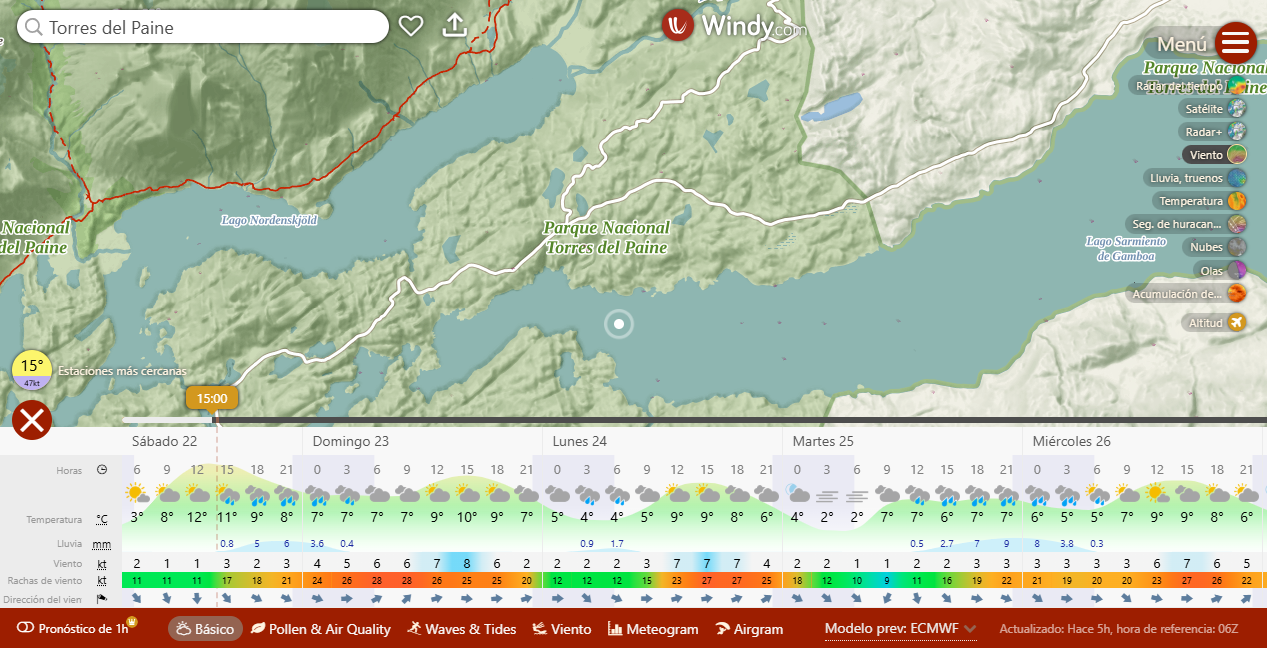
Recommendation 3: Check the weather from official sources
This is one of the most important recommendations and makes a concrete difference in safety.
Reliable sources to monitor the park's weather:
• Windguru
• Windy
• MeteoBlue
• Local forecast for Torres del Paine National Park
Recommended interpretation:
• Winds over 70 km/h require caution
• Winds over 100 km/h advise waiting
• Winds over 120 km/h mean completely stopping the route
Recommendation 4: Avoid walking in extreme weather
Avoiding walking in extreme weather not only means stopping the march. It also involves knowing how to identify the first signs of weather deterioration. If you notice that the wind starts to increase in gusts, that the fog lowers rapidly, or that the rain becomes more horizontal, it is a sign that the weather is entering an unstable phase. In those cases, the safest thing is to find a sheltered spot, assess the situation, and decide whether it is better to turn back.
These early decisions prevent exposing oneself to the most complex section of the pass just when the weather is at its critical moment.
“The essential rule is simple... if the weather gets complicated, return to the nearest camp”
Recommendation 5: If you go without a guide, seek companionship
If you are going to do the Self-guided O Circuit, it is highly recommended to coordinate with other hikers who are also going without a guide before starting the stretch between Camping Los Perros and Refugio Grey. Crossing Paso John Gardner accompanied offers greater safety, especially in case of sudden changes in the weather or low visibility.
If you do not find other travelers in the same situation, an alternative is to identify a guided group and walk near them during the crossing. Staying close to a guided team will help you maintain the right pace, stay on the correct trail, and make more informed decisions throughout the stretch.
In such a long and exposed section, avoiding crossing alone is a simple measure that significantly improves safety and peace of mind during the journey.
Safety in perspective: a demanding but manageable trek
The O Circuit is demanding, not only because of the weather but also because of the daily consistency. Accumulated fatigue can influence decision-making, especially after several days of hiking. Taking regular breaks, staying hydrated, and recognizing your own energy level helps avoid common mistakes in the final stretches. When the body is tired, concentration tends to decrease, so safety also involves knowing when to rest and when to move forward.
Reflection on the O Circuit experience
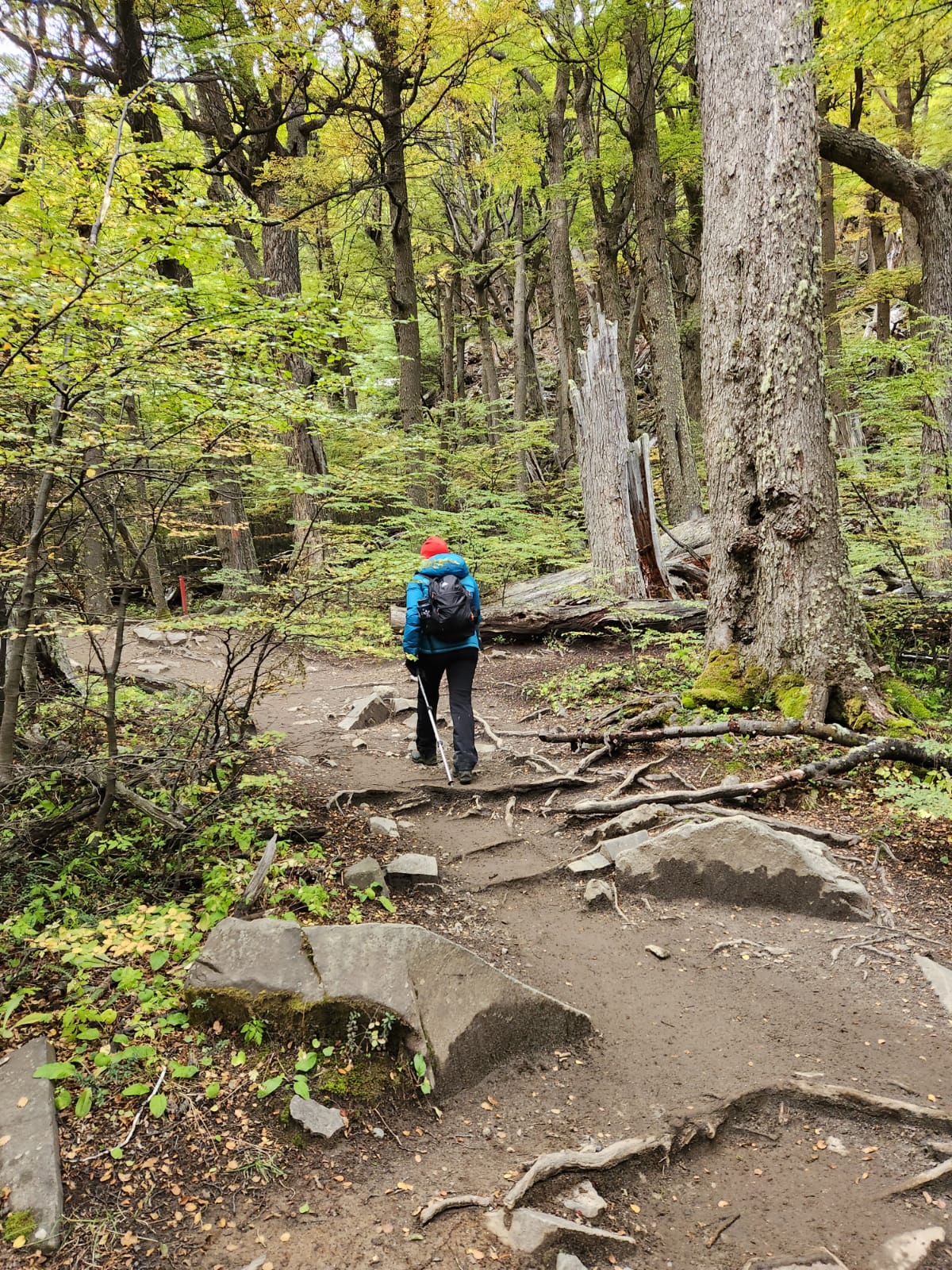
The O Circuit in Torres del Paine is one of the best treks in the world. Its beauty, intensity, and isolation make it an experience that is not only traveled with the legs but also with the head and heart. As you progress through its valleys and viewpoints, you become more aware of the power of the weather, the rhythm of nature, and how small one is in front of Patagonia. That mix of challenge and humility is, in large part, what makes this circuit unforgettable.
Safety is an essential part of that experience. Following the recommendations, maintaining adequate physical preparation, and making informed decisions not only ensure a safer trek but also allow for a better connection with the environment. Walking attentively to the weather, understanding the rhythms of the circuit, and approaching the journey with a responsible mindset does not diminish freedom... it enhances it.
At Outdoor Index, we understand the importance of a protected and well-guided experience. That's why we offer the O Circuit with Refuge for 7 days, a program that includes the accompaniment of a certified guide throughout the journey, allowing you to enjoy the trek in a safer, smoother, and more reliable way. You can check all the details here: O Circuit with certified guide.
Outdoor Index
@outdoorindex.cl


Post a comment!
Comments
Gracias por la Preocupacion