
How to choose the perfect sunglasses for my outdoor activities?
Learn how to choose outdoor sunglasses with UV protection, appropriate filter, good fit, safe lenses, and ventilation for your adventures.
Outdoor Index
@outdoorindex.cl
Choosing sunglasses for outdoor activities shouldn't depend solely on design, brand, or how sporty they look. When trekking, hiking, biking, running on trails, sailing, or spending many hours exposed to the sun, sunglasses serve a key function for your comfort and safety.
In nature, your eyes face very different conditions than in the city. There may be greater exposure to UV radiation, sudden changes in light, intense glare, wind, dust, branches, snow, water, or rocky surfaces that increase glare. That's why a good pair of sunglasses is not just an accessory. It's part of the essential gear to move better and protect your eye health.
The starting point is to understand that not just any dark lens will do. The darkness of the lens reduces visible light, but it doesn't guarantee protection against ultraviolet radiation. In fact, wearing dark lenses without UV protection can be risky because the pupil dilates and lets in more light without a real filter against UV rays.
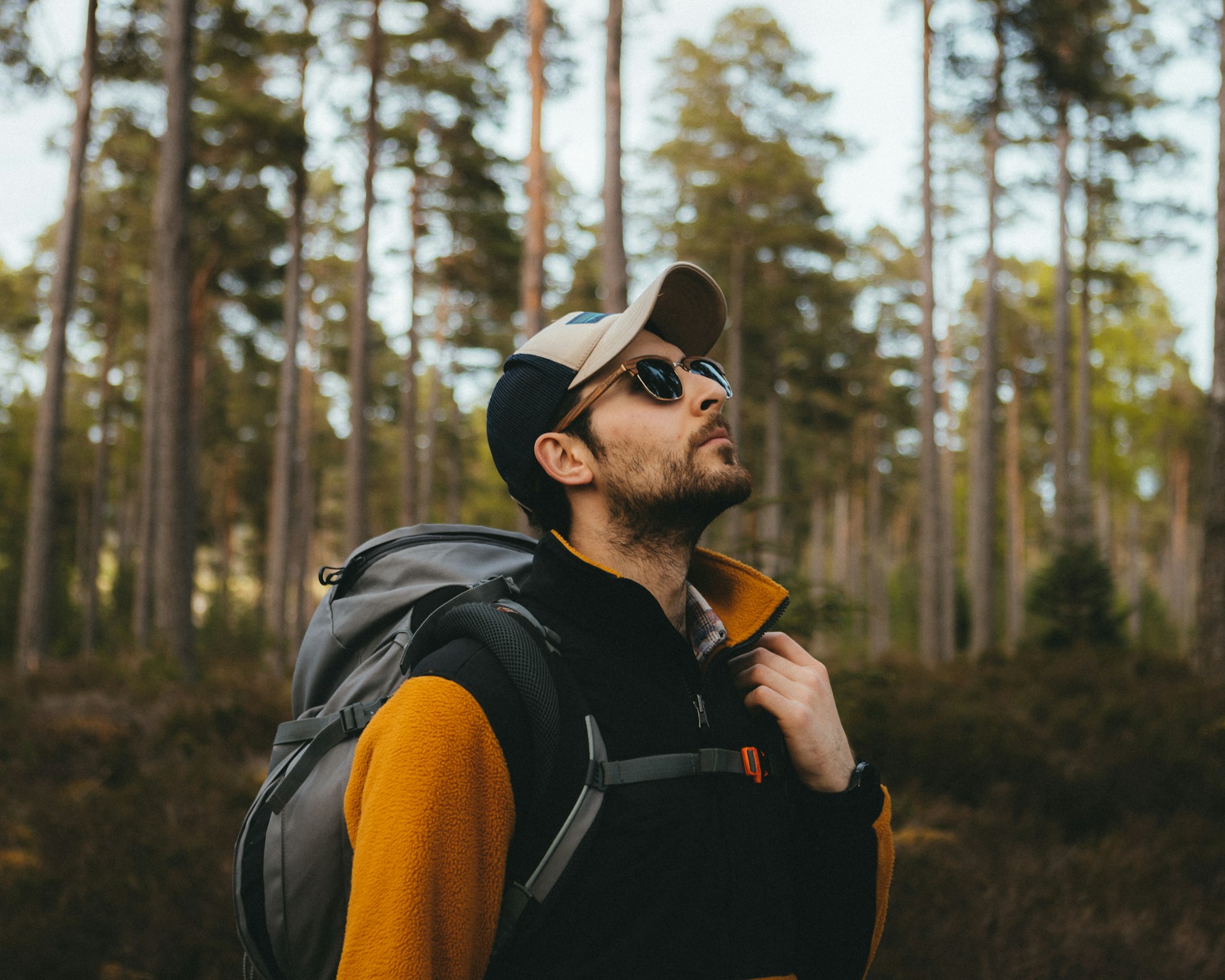
UV protection is the priority
The most important thing when choosing lenses for outdoor activities is to check that they indicate UV400 or 100% UV protection. This means they block UVA and UVB ultraviolet radiation, which can affect the eyes during prolonged exposure.
This point is especially relevant in the mountains. As you gain altitude, exposure to UV radiation increases, and if there is also snow, ice, water, or light-colored rock, the reflection can intensify exposure. In these scenarios, your eyes receive radiation not only from above but also from the environment.
Therefore, before focusing on the lens color, frame shape, or whether they are polarized, check the UV protection. That should be the minimum filter for any outdoor outing.
Solar filter category according to activity
In addition to UV protection, you should pay attention to the solar filter category. This category indicates how much visible light the lens allows to pass through and generally ranges from category 0 to category 4.
Category 0 lenses are almost transparent and are used in very low light conditions.
• The category 1 is suitable for cloudy days or soft light.
• The category 2 works for moderate brightness.
• The category 3 is one of the most recommended for trekking, mountains, and outdoor activities on sunny days.
• The category 4 is designed for extreme light conditions, such as high mountains, snow, glaciers, or areas with a lot of reflection.
For most trekking outings, lenses with UV400 protection and category 3 are usually a very good option. They provide protection against intense light without darkening vision too much.
For high mountains, snow, or glaciers, category 4 lenses may be more suitable because they significantly reduce glare. However, they should not be used for driving, as they are too dark and can decrease visibility on the road.
Wraparound lenses and good side coverage
In outdoor activities, light doesn't just come from the front. It can also enter from the sides or reflect off surfaces like snow, water, sand, rock, or light-colored paths. That's why the shape of the lens matters a lot.
For trekking, mountains, snow, kayaking, or any activity with prolonged exposure, it's ideal to choose wraparound lenses or those with good side coverage. This design helps block indirect light and also provides better protection against wind, dust, small particles, or branches.
Lenses that are too flat may look good for urban use, but they are not always the best option for the mountains. If they let in too much light from the sides, the protection is incomplete, especially in environments with high reflected radiation.
Lens material and impact resistance
One point that is often overlooked is the material of the lenses. In activities like trekking, trail running, cycling, climbing, or high mountains, the lenses can receive hits, falls, branches, small stones, or unexpected impacts.
Therefore, for outdoor use, it's advisable to prioritize impact-resistant lenses, such as those made of polycarbonate. This material is lightweight, durable, and much safer than glass in scenarios where falls or impacts may occur. Glass can offer good optical quality, but under a strong impact, it can shatter into fragments, which is not ideal for mountain activities or sports in motion.
It's also advisable to check that the lenses have good scratch resistance. A heavily scratched lens can affect visibility, create annoying reflections, and make you lose detail of the terrain. On trails, descents, or uneven surfaces, seeing well is also part of safety.
Photochromic lenses for light changes
Photochromic lenses are an excellent alternative for activities where light changes constantly. This type of lens lightens or darkens according to the intensity of UV radiation, allowing better adaptation to different environments without changing lenses.
They can be very useful in trekking, trail running, cycling, mountains, or routes where you move from a shaded forest to an open area with direct sunlight. They also help when the activity starts early with low light and then continues for hours with greater sun exposure.
However, not all photochromic lenses reach the same level of darkness. If you are going to be in high mountains, snow, or glaciers, you should check if the model reaches a sufficient category for those conditions. Some work very well for mixed activities, but may fall short in extreme light.
Polarized lenses to reduce glare
Polarized lenses help reduce glare produced by reflective surfaces. They are especially useful near water, in sailing, kayaking, fishing, coastal routes, very bright roads, or areas where reflection is bothersome.
For trekking and mountains, they can also provide visual comfort, although they are not always essential. In some cases, polarization can make it difficult to read certain screens or alter the perception of some contrasts on uneven surfaces.
The important thing is to understand that polarization does not replace UV protection. A lens can be polarized, but it must still indicate UV400 or 100% UV protection to be a safe option.
Ventilation and anti-fog treatment
Fogging is one of the most common problems when using lenses in outdoor activities. It can occur when climbing a hill, sweating, changing temperature, using a buff or mask, walking in the rain, or stopping after an intense stretch.
Therefore, in trekking, trail running, cycling, or high mountains, it's advisable to choose lenses with good ventilation. Some models have designs that allow for greater air circulation between the face and the lens, reducing moisture buildup.
There are also lenses with anti-fog treatment, which help keep vision clearer during exertion. This may seem like a minor detail, but in a technical descent, a river crossing, a rocky route, or a cold day, seeing clearly is essential.
A lens that fogs up all the time ends up being uncomfortable and unsafe. If you have to constantly take it off to clean the lens, you lose protection and attention to the terrain.
Lens color and perception of the environment
The color of the lens can also influence how you see the terrain. Gray lenses maintain more natural colors and work well on very bright days. Brown or amber tones can enhance contrast, which is useful on trails, dirt roads, forests, or areas with changes in relief. Yellow or orange tones are often used in low light conditions, although they are not the most suitable for intense sun exposure.
For general trekking, mountains, and various outdoor activities, gray, brown, or green colors are usually good options. For snow or high mountains, more than the color, the most important factors will be the filter category, UV protection, side coverage, and lens durability.
There is no perfect color for all activities. The important thing is that the lens adapts to the environment where you will use it most frequently.
Comfortable fit and stability during movement
A good lens for outdoor activities should stay firm while you walk, run, bike, climb, descend, or move with a backpack. The temples should not be loose or press too hard. The nose bridge should feel comfortable and stable, even when you sweat or have been wearing them for several hours.
In trekking and mountains, a lens that moves constantly can become a nuisance. If it slips, pinches, or bounces, you'll end up adjusting it all the time. That's why it's advisable to test how it feels when moving your head, looking down, or simulating the motion of walking.
It's also recommended that they be lightweight, durable, and compatible with a safety cord. On exposed routes, strong winds, or activities near water, a cord can prevent you from losing your lenses at the worst moment.
What lenses to choose according to your activity
For trekking in hills, national parks, or mid-mountain routes, a good alternative is to choose lenses with UV400 protection, category 3, wraparound design, impact-resistant lenses, and a good fit. This combination works well for most walks with sun exposure.
For high mountains, snow, or glaciers, it's advisable to look for more specific protection. In these cases, category 4 lenses, with side coverage, certified UV protection, and impact-resistant lenses are a much more suitable option. Glacier-type models can also be useful because they block light entering from the sides better.
For water activities like kayaking, sailing, or routes near lakes and rivers, polarized lenses can greatly improve visual comfort, as long as they also have UV protection.
For trail running or cycling, in addition to UV protection, it's advisable to prioritize lightweight, stable, impact-resistant lenses, with good ventilation and, if the route changes a lot between shade and sun, photochromic lenses.
So... check your lenses before heading out
Before relying on your lenses for an important outing, check if they really meet the necessary requirements. Verify if they indicate UV400 or 100% UV protection, if they have a visible filter category, if they fit well on your face, if they have good side coverage, and if the lens material is suitable for the activity you are going to perform.
Also, check their overall condition. Deep scratches, loose frames, unstable temples, or lenses that fog up easily can affect comfort and safety. If you're going on a long route, to snowy areas, or places with high sun exposure, it's not advisable to improvise with low-quality lenses or those without clear certification.
Even on cloudy days, there can be UV radiation. Clouds reduce the feeling of brightness, but they do not completely eliminate exposure. Therefore, wearing appropriate lenses should be a normal part of your gear, just like sunscreen, hats, or technical clothing.
Taking care of your eyes is also part of outdoor safety
Your eyes are an essential part of your outdoor experience. They allow you to read the terrain, anticipate obstacles, enjoy the landscape, and move safely. That's why choosing good sunglasses is not a minor detail, especially when we talk about trekking, high mountains, snow, glaciers, or long days under the sun.
The recommendation is clear. Look for lenses with UV400 or 100% UV protection, choose a suitable filter category for your activity, prioritize wraparound models, impact-resistant lenses, good ventilation, and a comfortable and stable fit.
A good pair of lenses can accompany you for years and protect you in various outdoor scenarios. More than an accessory, it's an investment in safety, comfort, and eye health. In nature, seeing well is also a way to take care of yourself.

